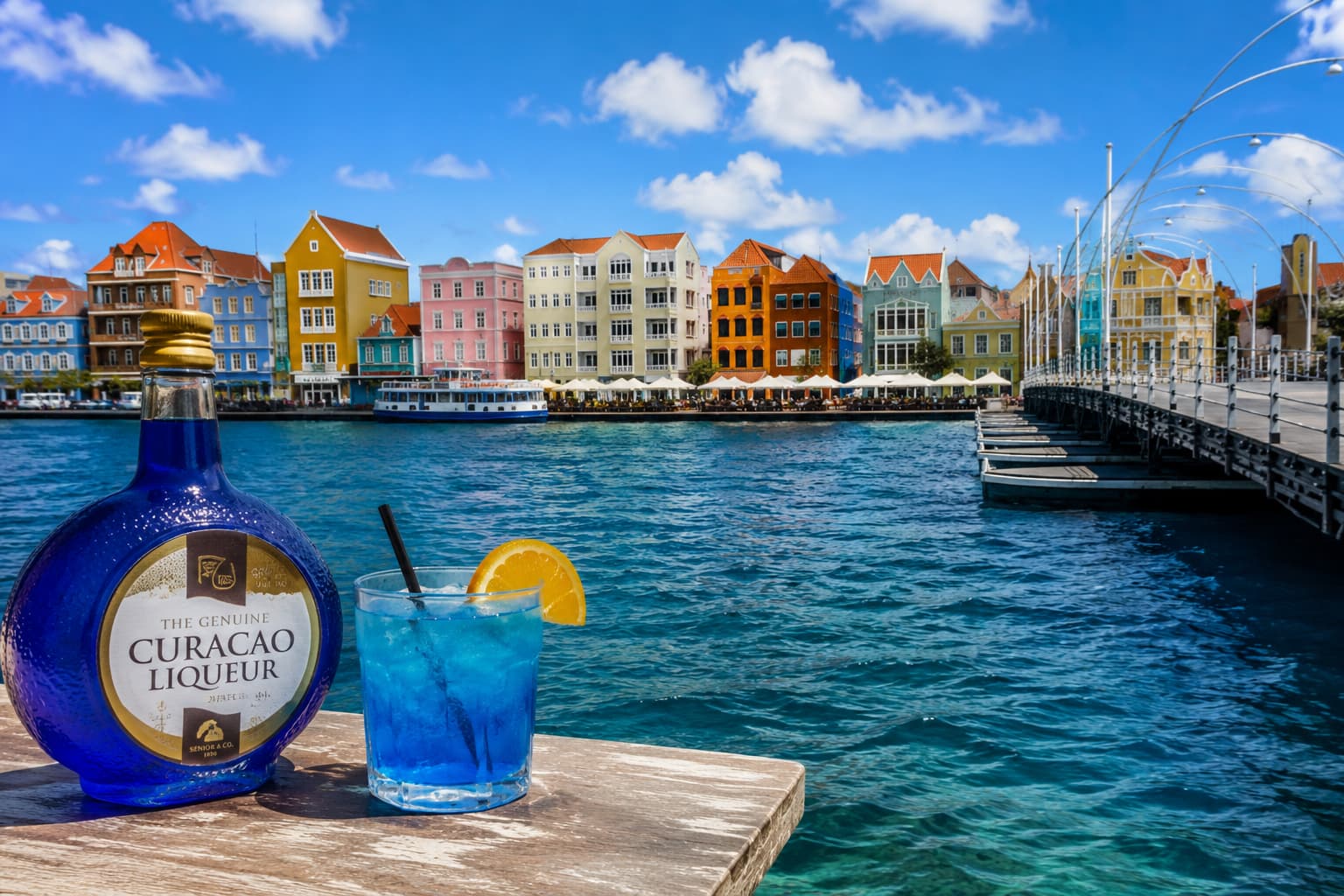
Every cocktail lover has poured something blue. That electric-blue liqueur glowing in a Blue Lagoon or a Blue Hawaiian is Blue Curaçao, and here is the thing most people never realize: it is not just a colour, it is a place.
It comes from a sun-baked island in the southern Caribbean that shares its name, where the liqueur has been distilled from local orange peel since 1896, and where you can taste it straight from the source. For anyone who loves a good drink, or spends time reading up on the best cocktails, that alone is reason enough to visit. But Curaçao turns out to be far more than its famous export: a UNESCO-listed colonial capital, more than 30 beaches, world-class diving, and a rugged wild coast, all wrapped in year-round sunshine.
That last part matters. Curaçao sits outside the main Atlantic hurricane belt, making it one of the Caribbean’s more reliable year-round destinations for warm weather.
How you experience it depends on what you are after, whether that is the drink, the culture, the beaches, or the wild interior. A few things help it go smoothly. Book reputable operators, and remember the beaches are spread out in coves, so a car or a tour makes a big difference. Here are the best ways to experience it, ranked.
1. Compare and Book It All in One Place
Curaçao packs distillery tours, colorful city walks, beach-hopping, snorkeling, and boat trips into one island, with half-day and full-day options and lots of operators. Sorting that from home, and pairing the highlights sensibly, takes some doing. Curacao Island Tours is a platform built around this island, so instead of guessing you get the options laid out clearly by type, length, and what each includes.
The value is that it combines the highlights efficiently with local guides who know the hidden coves, and sorts the transport, which matters when the best beaches are scattered along the coast. You can weigh a city-and-distillery day against a beach or boat trip, and book a trustworthy operator.
You can compare Curaçao tours here and plan a well-paced trip before you go, which helps given how spread out the island is.
Best for anyone who wants a sorted trip without the guesswork. If you already know your plan, book directly.
2. Taste the Source: The Blue Curaçao Distillery
For a drinks enthusiast, this is the pilgrimage. Landhuis Chobolobo, a historic estate in Willemstad, is home to the Curaçao liqueur produced by Senior & Co. The liqueur is traditionally made using the dried peel of the laraha, a bitter orange associated with Curaçao, and a guided visit walks you through the process before the best part: tasting the famous liqueur in blue and other variations.
It is a fun, easy visit that connects you to the island’s drinking culture and history, and it pairs perfectly with a day exploring the capital. You will never look at a blue cocktail the same way again.
It is a short experience rather than a full day, so combine it with Willemstad and check current opening days and hours before visiting.
Best for cocktail lovers and anyone curious about how Curaçao’s most famous drink is made.
3. Colorful Willemstad: The UNESCO Capital
The island’s capital is one of the most photogenic cities in the Caribbean. Willemstad is a UNESCO World Heritage Site, famous for its rows of pastel-coloured Dutch colonial buildings lining the Handelskade waterfront.
Wander the districts of Punda and Otrobanda, cross the floating Queen Emma Bridge, explore the markets, and look for street art and restored architecture around Scharloo. This is where the island’s culture, history, restaurants, and bar scene come together, and it makes a natural pairing with the distillery.
It can get busy on cruise-ship days, so an early start helps you enjoy the city before the biggest crowds arrive.
Best for first-timers, culture lovers, and photographers.
4. Beaches and the Underwater World
Curaçao’s coast is a string of gorgeous coves rather than one continuous beach, which is half the fun. Grote Knip, also called Playa Kenepa Grandi, is the postcard-perfect turquoise bay framed by cliffs, while Cas Abao combines clear water and soft sand with useful facilities. Playa Porto Mari is known for snorkeling and diving, and Playa Piskadó is famous for frequent sea-turtle sightings.
Beneath the surface, Curaçao is one of the Caribbean’s strongest snorkeling and diving destinations, with extensive shore-diving access, coral reefs, and sites such as the Tugboat wreck.
Because the beaches are spread out, renting a car or joining a beach-hopping tour is the easiest way to see several in one day. Around turtles and reefs, keep your distance, never touch wildlife or coral, and follow local conservation rules.
Best for beach lovers, snorkelers, and divers.
5. Wild Curaçao: Christoffel Park, Shete Boka and Klein Curaçao
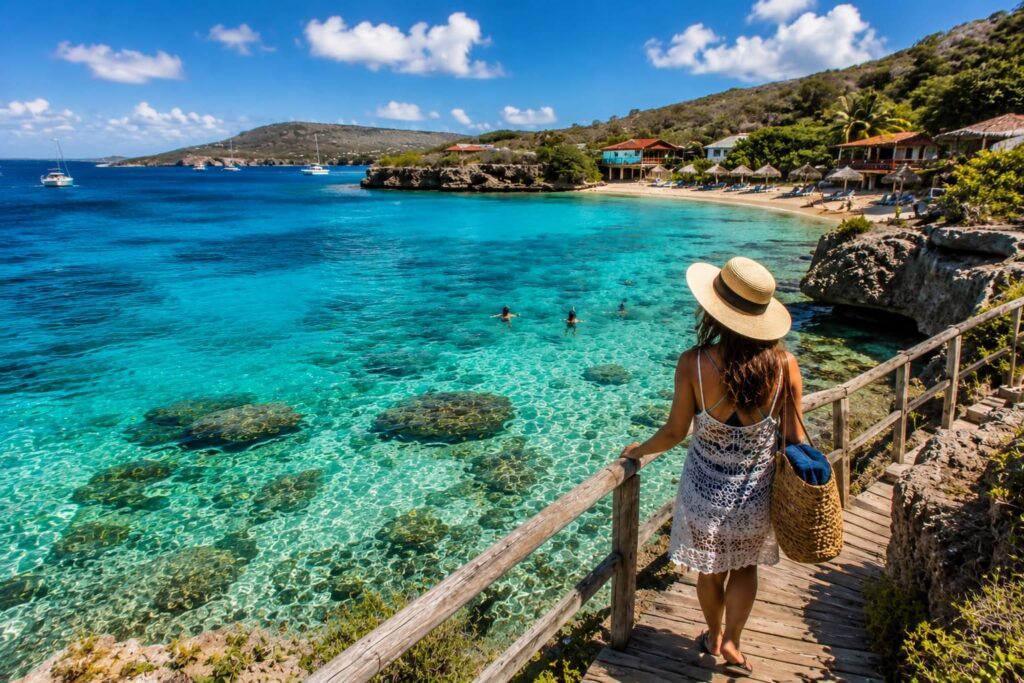
For nature and adventure, head beyond the beaches. Christoffel National Park is the island’s largest protected natural area, with hiking routes including the climb toward Christoffelberg and opportunities to see native wildlife and vegetation.
Nearby Shete Boka National Park protects a dramatic stretch of the north coast where waves crash into rocky inlets, caves, and blowholes. It is the opposite of Curaçao’s calm southern beaches: raw, loud, and impressive.
Then there is Klein Curaçao, an uninhabited island southeast of Curaçao reached on full-day boat trips. It is known for bright white sand, exceptionally clear water, snorkeling, and its abandoned lighthouse.
The park hikes are best started early, before the strongest midday heat, while Klein Curaçao requires committing most of the day to the boat trip.
Best for hikers, nature lovers, and anyone wanting a classic desert-island escape.
A Few Practical Things Before You Go
Curaçao works well as a year-round destination. Temperatures remain warm throughout the year, and its position in the southern Caribbean puts it outside the region most frequently affected by hurricanes. Rainfall tends to increase later in the year, but showers are often brief.
Rent a car or book tours to reach the scattered beaches and national parks, since many of the island’s best spots sit well outside central Willemstad. Full-day tours are useful for travelers who want to see several parts of Curaçao efficiently, while half-day options work well for shorter stays and cruise visitors.
Book popular experiences such as Klein Curaçao boat trips ahead during busy periods, and choose operators that follow responsible wildlife practices, particularly around sea turtles and coral reefs.
For planning, the official Curaçao tourism site is a useful resource, and UNESCO’s page on Willemstad provides background on the capital’s historic significance. Both pair well with any related Caribbean travel guides already on the site.
Choosing the Right One for You
Curaçao rewards travelers who match the day to what they love.
Start by comparing your options through Curacao Island Tours so you build a well-paced trip with good local guides. Here for the drink, make the distillery one of your first stops. Drawn to culture, wander colorful Willemstad. Craving the water, go beach-hopping and snorkeling. Wanting adventure, explore the national parks and sail to Klein Curaçao.
However you do it, raise a glass while you are there, ideally a blue one, and toast the fact that you are drinking it on the island that gave Curaçao liqueur its name. Few cocktails come with an entire Caribbean destination attached, and this one is well worth the trip.
Author note: recommendations here are based on Curaçao’s established attractions and tour formats. Prices, hours, park access, and tour availability change, so confirm current details before you go.